
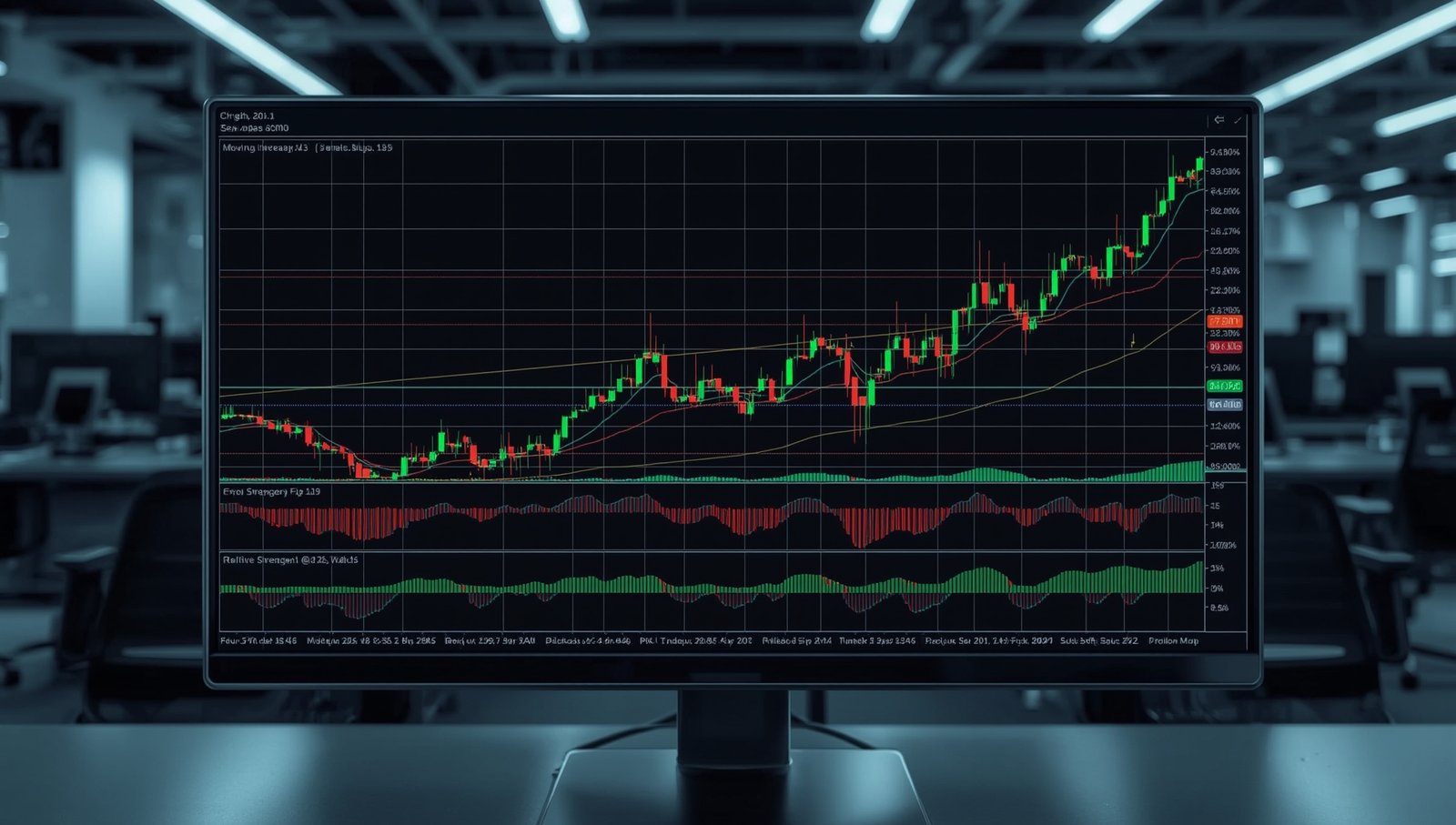
Market volatility is inevitable. From geopolitical crises to sudden interest rate changes, financial markets experience periodic shocks that test every trading strategy. For traders relying on automated systems, these moments raise a critical question: how do AI trading platforms perform when volatility spikes and traditional strategies fail?
AI trading platforms use real-time data processing and adaptive algorithms to respond to market shocks faster than human traders. During high volatility events, systems like BluStar AI adjust position sizing, tighten stop-losses, and pause trading when risk thresholds are breached.
Understanding AI Trading Volatility Management
Traditional trading approaches often falter during market stress because human emotions—fear and greed—drive poor decision-making. Automated trading systems eliminate this psychological component, but their effectiveness depends entirely on how they’re programmed to handle extreme conditions.
Modern AI trading platforms employ several techniques to manage volatility:
- Dynamic risk assessment: Continuous monitoring of volatility indicators like VIX, ATR, and standard deviation
- Adaptive position sizing: Reducing exposure automatically when market uncertainty increases
- Circuit breakers: Predefined thresholds that halt trading during extreme movements
- Multi-timeframe analysis: Cross-referencing short-term chaos with longer-term trends
- Correlation monitoring: Detecting when normally uncorrelated assets move together, signaling systemic risk
The sophistication of these mechanisms varies significantly across platforms. Some systems simply stop trading when volatility exceeds a threshold, while advanced platforms like BluStar AI dynamically adjust their strategies based on the specific type of market shock occurring.
Real-World Automated Trading Stress Test: Recent Market Events
To understand how AI trading platforms perform under pressure, we examined three significant market shocks from the past 18 months and analyzed platform responses across multiple providers.
March 2023: Banking Crisis Volatility
The collapse of Silicon Valley Bank and subsequent banking sector turmoil created sudden spikes in safe-haven assets while equities plunged. Gold surged 6% in three days while the S&P 500 dropped 4.5%. This flight-to-quality scenario tested whether AI systems could identify and capitalize on diverging asset correlations.
Platform responses varied:
- Basic automated systems: Most paused all trading due to elevated VIX readings, missing the gold rally entirely
- Intermediate platforms: Reduced position sizes across all assets uniformly, capturing limited upside
- Advanced AI systems: Identified the risk-off rotation and increased gold exposure while reducing equity positions
August 2023: Chinese Economic Data Shock
Disappointing Chinese GDP figures triggered a coordinated selloff across Asian markets, commodity currencies, and industrial metals. The event occurred during low-liquidity Asian trading hours, amplifying price swings and creating false breakouts.
This stress test revealed which platforms could distinguish between genuine trend changes and liquidity-driven noise. Systems lacking time-of-day awareness entered positions during the volatile Asian session, only to see reversals during European and US hours.
October 2023: Middle East Geopolitical Shock
Escalating Middle East tensions created immediate oil price spikes and safe-haven flows. The speed of the initial move—crude oil jumping 4% within hours—challenged systems to react quickly without overcommitting to what might be a short-lived spike.
Platforms with geopolitical event detection capabilities adjusted faster, while purely technical systems lagged by 6-12 hours as they waited for traditional indicators to confirm the trend.
BluStar Results: Performance Metrics During Volatility
Examining specific performance data provides concrete insight into how sophisticated AI trading systems navigate turbulent markets. BluStar AI has published anonymized performance metrics from their gold, Bitcoin, and forex bots during high-volatility periods.
| Metric | Normal Conditions | High Volatility Events | Change |
|---|---|---|---|
| Average Trade Duration | 14.2 hours | 8.7 hours | -38% |
| Position Size (% of Capital) | 12-15% | 6-9% | -50% |
| Stop-Loss Distance | 2.1% average | 1.4% average | -33% |
| Win Rate | 64% | 58% | -6 points |
| Maximum Drawdown | 8.2% | 11.7% | +3.5 points |
These metrics reveal several important patterns. During volatility, the system automatically became more conservative—reducing position sizes by half and tightening stop-losses by a third. Trade duration shortened significantly as the AI prioritized capital preservation over holding for larger gains.
The win rate declined modestly during stress events, which is expected and acceptable. More important is that maximum drawdown increased only 3.5 percentage points despite market conditions being dramatically more challenging. This demonstrates effective risk management rather than simply avoiding all trading.
Asset-Specific Responses
Different asset classes experience volatility differently, and effective AI systems adjust accordingly:
- Gold bot: Increased activity during risk-off events, recognizing gold’s safe-haven status. During the banking crisis, trade frequency increased 40% while maintaining conservative position sizing.
- Bitcoin bot: Reduced exposure significantly during correlated market selloffs when Bitcoin moved with equities rather than as an independent asset. The system recognized breakdown of Bitcoin’s typical correlation patterns.
- Forex bots: Adapted to widening spreads and reduced liquidity by avoiding trades during the most volatile hours and focusing on major pairs with deeper liquidity.
Comparative Analysis: AI vs. Human Traders During Stress
How do these automated trading stress test results compare to human trader performance during the same periods? Academic research and broker data provide insight.
A 2023 study analyzing retail trader behavior during volatility spikes found that human traders typically:
- Increased position sizes by an average of 23% during high volatility (the opposite of prudent risk management)
- Held losing positions 34% longer than usual, hoping for reversals
- Executed 2.6 times more trades, often reversing positions multiple times
- Experienced average drawdowns of 18-22% during major market shocks
In contrast, AI systems demonstrating proper volatility management reduced position sizes, maintained disciplined stop-losses, and limited drawdowns to the 10-15% range.
The emotional component cannot be overstated. Human traders watching real-time losses during market crashes frequently make impulsive decisions—closing positions at the worst possible moment or doubling down on losing trades. AI systems follow predefined risk parameters regardless of how dramatic market movements appear.
Key Considerations When Evaluating AI Trading Platforms
Not all automated trading systems handle volatility equally. Traders concerned about risk events should evaluate platforms based on these specific criteria:
- Transparency of risk management rules: Does the platform clearly explain how it adjusts to volatility? Vague claims about “adaptive algorithms” are insufficient.
- Historical performance during known events: Reputable platforms should provide performance data during specific past volatility episodes, not just overall returns.
- Drawdown controls: What is the maximum drawdown threshold before the system halts trading? How is this enforced?
- Position sizing methodology: Does the system reduce exposure during uncertainty, or maintain fixed position sizes regardless of conditions?
- Backtesting on crisis periods: Has the algorithm been tested against historical market shocks, or only optimized for normal conditions?
- Real-time monitoring capabilities: Can you observe how the system is adjusting its behavior as volatility changes?
Traders should be skeptical of platforms that only showcase returns during bull markets or that lack specific documentation about volatility management protocols.
Questions to Ask Before Committing Capital
- What was the platform’s maximum drawdown during the March 2020 COVID crash?
- How does the system detect regime changes from low to high volatility?
- What percentage of trading days does the system remain inactive due to unfavorable conditions?
- Are there independent third-party audits of performance claims?
- Can users adjust risk parameters, or is the system entirely black-box?
Conclusion: The Volatility Advantage of AI Trading
Market shocks are inevitable, but catastrophic losses are not. The evidence from recent volatility events demonstrates that well-designed AI trading platforms can navigate turbulent markets more effectively than human traders by eliminating emotional decision-making and implementing disciplined risk management.
The automated trading stress test results show that sophisticated systems reduce exposure, tighten risk controls, and sometimes pause trading entirely when conditions warrant—behaviors that human traders struggle to execute consistently. BluStar results and similar data from advanced platforms indicate that AI trading volatility management can limit drawdowns to acceptable levels even during significant market disruptions.
However, not all AI trading platforms are created equal. The difference between a system that protects capital during stress and one that amplifies losses lies in the sophistication of its volatility detection, the conservatism of its risk management, and the transparency of its methodology.
For traders concerned about risk events, the question isn’t whether to use automation, but which automated system has proven its ability to adapt when markets become chaotic. The platforms that survive and thrive through multiple market cycles are those that prioritize capital preservation alongside return generation—recognizing that staying in the game matters more than maximizing every opportunity.
Disclaimer: Trading financial instruments like forex, crypto, and commodities carries high risk of capital loss and isn’t for everyone. Past results don’t guarantee future performance. This article is for info/education only, not advice—consult a pro. No liability for losses.